How to choose the best kitchen worktop for your home
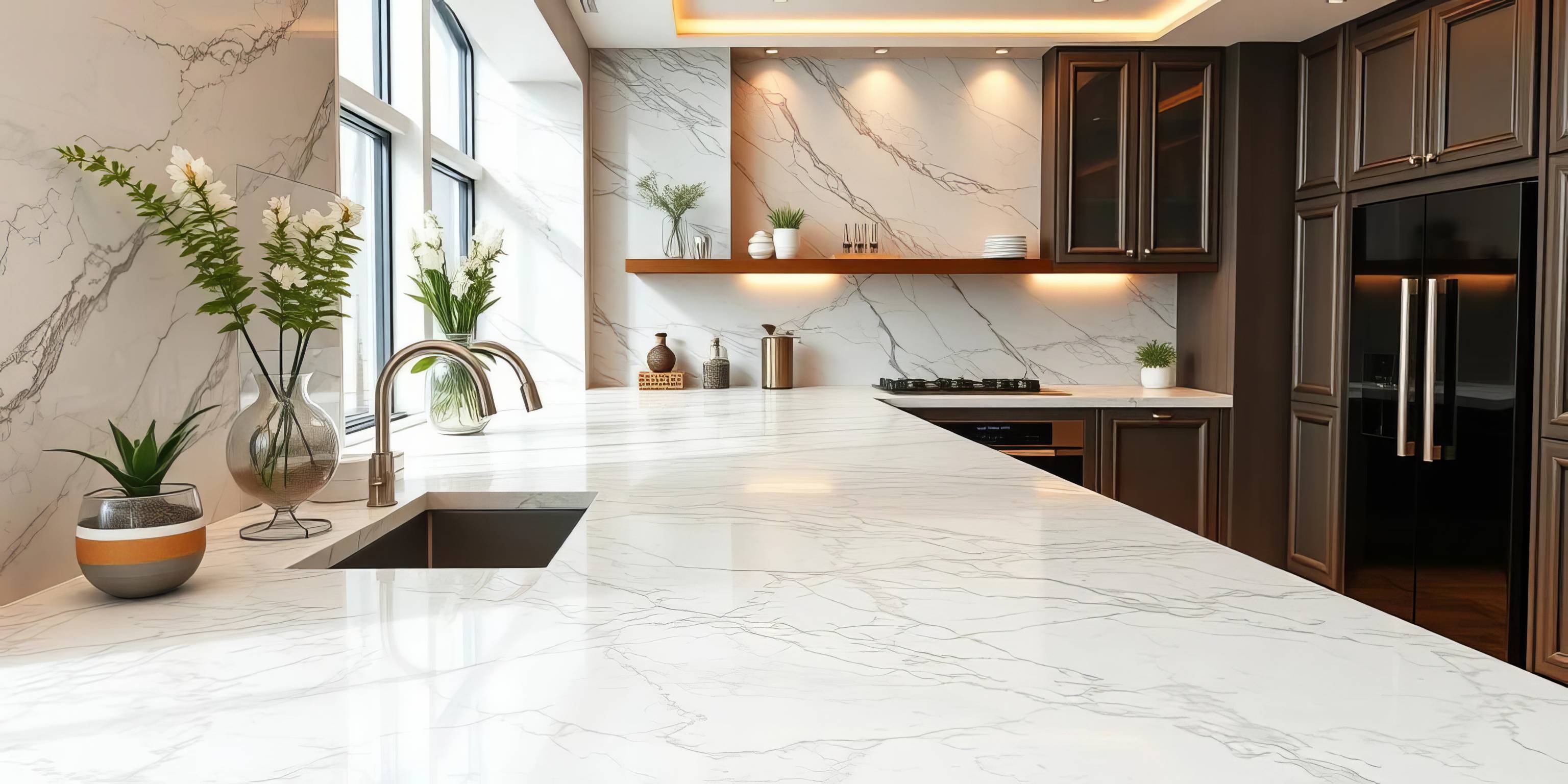
1. Laminate
What it is: Layers of kraft paper and resin bonded to a particleboard or MDF core; the top decorative layer can mimic wood, stone or colour.
Pros
- Very affordable.
- Huge variety of looks and finishes
- Low weight — easier to install.
Cons
- Can chip, scorch or delaminate if moisture reaches the core.
- Not easily repaired — deep scratches usually mean replacement of the section.
- Use chopping boards and avoid hot pans directly on the surface.
2. Solid surface
What it is: Acrylic or acrylic/polyester blends formed into a continuous sheet — seams can be glued nearly invisible.
Pros
- Seamless look; integrated sinks are possible.
- Repairable — scratches can often be sanded out.
- Non-porous, hygienic and stain-resistant to many common spills.
Cons
- Can be scratched or scorched by hot pans.
- Less heat resistant than stone; use hot pads.
3. Quartz / Engineered stone
What it is: Crushed natural quartz mixed with resins and pigments — manufactured into slabs
Pros
- Extremely hard and durable; very low porosity.
- Wide range of colours and consistent patterns.
- Low maintenance — no sealing required.
Cons
- Much more of a premium price point.
- Not as heat resistant as some natural stones — avoid placing hot pans directly.
4. Granite
What it is: A natural igneous stone cut into slabs and polished.
Pros
- Very hard and heat resistant; each slab is unique.
- Timeless feel
Cons
- Porous — requires periodic sealing to resist staining.
- Heavy — requires strong cabinetry and professional installation.
5. Marble
What it is: A metamorphic natural stone prized for its veining and elegance.
Pros
- Beautiful, classic look — excellent for baking prep (cool surface). When we think of a new kitchen, we all think of marble.
Cons
- Soft and porous compared to granite — scratches, etching (from acids) and stains are very common.
- Requires careful maintenance and sealing; not ideal for heavy-cook households.
6. Butcher block / Wood
What it is: Timber boards (edge glued or laminated) — styles include plank, end-grain and strips.
Pros
- Warm, natural look; can be sanded and repaired.
- Great for chopping zones (some prefer end-grain because it’s kinder to knives).
Cons
- Can stain and is susceptible to water damage; needs regular oiling/sealing.
- Can dent or scratch; not heatproof.
7. Dekton
What it is: Sintered porcelain slabs that are very dense and can be made very thin and large.
Pros
- Highly heat, scratch and stain resistant; UV stable (good for outdoor kitchens).
- Available in large, thin slabs that mimic stone or achieve dramatic looks.
Cons
- Edge fragility on very thin slabs if not handled correctly
- Installation requires specialist installers and careful handling.
8. Corian
What it is: Corian can be glued and blended to create a continuous surface with near-invisible seams and integrated bowls.
Pros
- Repairable: Scratches and minor damage can usually be sanded out or refinished, often without replacing the whole piece.
- Formability: Can be thermoformed into curves, custom shapes and waterfall edges—great for bespoke designs.
- Consistent, uniform look: Because it’s homogeneous, the colour and pattern run through the thickness.
- Friendly for DIY tweaks: Small repairs or edge touch-ups are more achievable than on very hard stone-like surfaces.
Cons
- Lower heat tolerance: Not ideal to place very hot pans directly on the surface; heat can cause discoloration or damage if contact is prolonged.
- Scratches possible: Softer than sintered surfaces and can show wear; requires occasional maintenance to keep pristine.
- Can look less “natural stone”: If you want a convincing stone aesthetic, Corian’s uniform look may not match that preference.
- Repairability is a plus but also a sign: while you can sand out damage, frequent refinishing may be needed in very high-wear scenarios.
Choosing the right worktop - Checklist
- Budget: Materials and installation can vary hugely. Decide your total spend first.
- Maintenance: Are you happy to oil or seal periodically?
- Appearance: Do you want a uniform look (quartz) or unique natural variation (granite, marble)?
- Weight & installation: Some stones and concrete require reinforced cabinets and specialist fitters.
- Longevity & resale: Durable, low-maintenance surfaces often have better long-term value.
- Environmental concerns: Check sourcing, recycled content, and embodied carbon if this matters to you.
Practical care tips (applies to most materials)
- Always use chopping boards — even on “tough” surfaces you’ll prolong life and blade sharpness.
- Use trivets or hot pads for hot pans unless the material is proven heatproof.
- Clean spills quickly — acids (vinegar, lemon, wine) can etch some stones and finishes.
- Follow manufacturer instructions for sealing and cleaning products — especially for porous stones and wood.
- For repairs (chips, deep scratches), contact a professional recommended by the installer or manufacturer.
Some frequently asked questions
- Which is the most durable?
- Engineered quartz scores very highly for scratch, stain and impact resistance. Granite is also durable but needs sealing.
- Which is best for food prep?
- Non-porous surfaces like quartz and sealed granite are hygienic. But many bakers prefer marble's cool surface for pastry.
- Can worktops be repaired?
- Many can: solid surface, wood, and some stones can be repaired or re-finished. Laminates and some composites may be harder to fix seamlessly.
Final thoughts
There's no single "best" worktop — it's a balance between taste, budget and how you use your kitchen.